
Search Indiana County Court Records
The official statewide starting point is the Pennsylvania Unified Judicial System Web Portal. Its Case Search tool provides public docket sheets for Court of Common Pleas cases, Magisterial District Court matters, and appellate records. Indiana County also provides a paid civil subscription portal through the Prothonotary/Civil Division, while criminal payments and some traffic payments run through PAePay. The statewide portal is the better first stop for most public searches because it separates Common Pleas cases from lower-court traffic, landlord-tenant, summary, and preliminary criminal records.
Search results work best when the court level is chosen before the name or number is entered. Use Court of Common Pleas for felony, misdemeanor trial, major civil, family, divorce, and estate-related court files. Use Magisterial District Courts for many traffic citations, preliminary criminal events, landlord-tenant filings, and smaller civil claims. Full documents, certified copies, older files, sealed-file questions, and records not visible online require the office that holds the file.
- Open UJS Case Search and choose the court level that matches the case type.
- Enter a docket number when known, or search by participant name with Indiana County as a filter.
- Review the docket sheet for caption, filing date, charges or claims, events, disposition, and financial entries.
- For civil copies, contact the Prothonotary; for criminal copies, contact the Clerk of Courts.
- For estates, short certificates, or Orphans' Court filings, contact the Register of Wills and Clerk of Orphans' Court.
The UJS Web Portal is a key official source for Indiana County Court record searches.
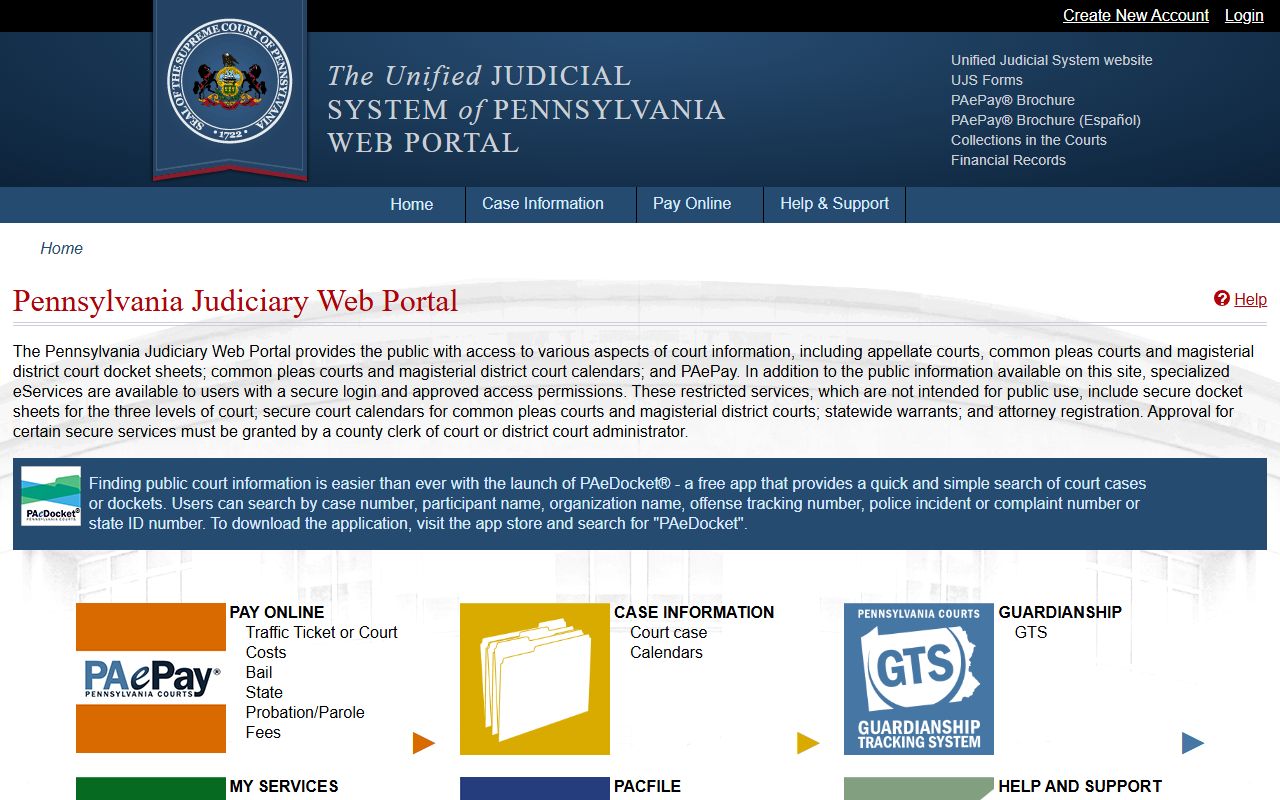
The portal matters because Indiana County does not publish one free county-built database for every court file.
The related UJS Case Search page is the specific docket-search entry used for many Indiana County court records.
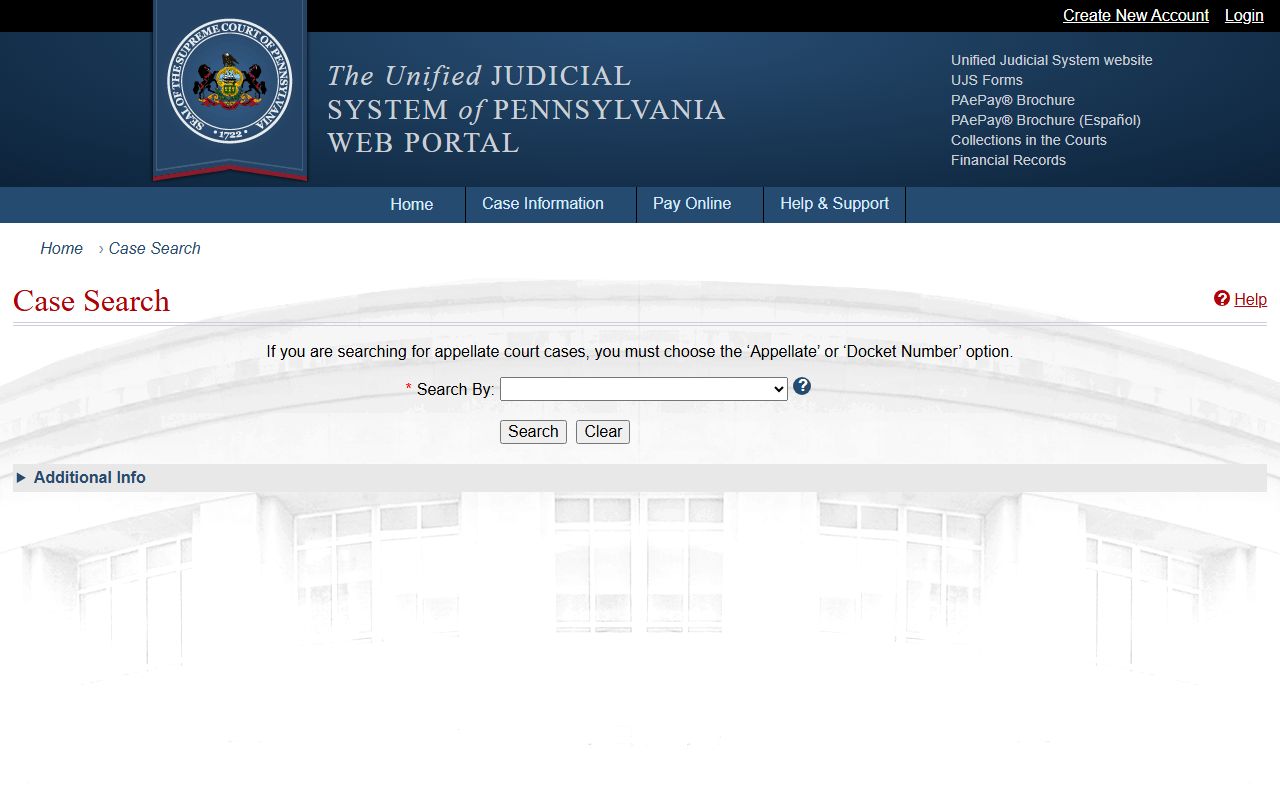
That search screen is where users move from the statewide portal landing page into a county, court-level, docket-number, or participant-name search.
Indiana County Record Search Fields
Public docket searches commonly rely on court level, docket number, name, county, filing dates, and case category. The exact screen can change by court type, but the research file supports the following field inventory for statewide docket searches. If a search returns too many results, narrow by county first, then by filing range or case category. If a search returns no result, try the other court level before assuming no record exists.
| Field Label | Type | Required | Notes / Format |
|---|---|---|---|
| Court Type | Dropdown or tab | Usually yes | Choose Common Pleas, Magisterial District, or Appellate before searching. |
| Docket Number | Text | No | Best when the official number is known. |
| Participant Name | Text | No | Use last name, first name, or business name where supported. |
| County | Dropdown | No | Select Indiana to narrow statewide results. |
| Case Category | Dropdown | No | Options depend on the court level selected. |
Indiana County Court System
Indiana County's main trial court is the Court of Common Pleas for the 40th Judicial District. That court hears criminal cases, civil cases, family-law issues, estate matters, and juvenile court matters. Lower-level matters begin in Magisterial District Courts, which handle traffic citations, preliminary arraignments and preliminary hearings, landlord-tenant cases, smaller civil claims, and summary offenses. Appeals move through Pennsylvania's Superior Court or Commonwealth Court, with discretionary review by the Supreme Court of Pennsylvania.
Case flow in many criminal matters is practical rather than abstract: arrest or complaint, preliminary arraignment at the MDJ level, preliminary hearing, transfer to Common Pleas if held for court, then arraignment, motions, plea or trial, disposition, and sentence. Civil and family cases usually begin in Common Pleas through the Prothonotary. Estate and guardianship filings use the Register of Wills and Clerk of Orphans' Court structure.
| Court or Office | Role | Common Record Types |
|---|---|---|
| Court of Common Pleas | County trial court | Criminal, civil, family, estate, juvenile, appeals from lower courts. |
| Magisterial District Courts | Lower courts | Traffic, summary offenses, preliminary criminal, landlord-tenant, small civil claims. |
| Prothonotary | Civil filing office | Civil complaints, family/divorce files, judgments, liens, appeals. |
| Clerk of Courts | Criminal filing office | Criminal case files, costs, fines, PAePay and PACFile pathways. |
| Register of Wills and Clerk of Orphans' Court | Estate and marriage office | Marriage licenses, certified marriage copies, estates, guardianships, Orphans' Court filings. |
Indiana County Courthouse Records
The central courthouse is at 825 Philadelphia St., Indiana, PA 15701. The main county phone is 724-465-3800, and public offices generally operate Monday through Friday, 8 a.m. to 4 p.m. Court Administration, the Court of Common Pleas judges, the Prothonotary and Clerk of Courts, the Sheriff's Office, the District Attorney, the Public Defender, and the Register of Wills/Recorder/Clerk of Orphans' Court are tied to this courthouse complex.
Visitors should allow time for courthouse security. County materials say security personnel staff main entrances and use detection devices to keep weapons out of facilities. Cell phones are deposited with Security Checkpoint Officers while visiting the courts. Parking is limited near the building, with six free 45-minute spaces behind the courthouse, metered street parking, and the Indiana Borough Parking Garage nearby.
Indiana County Courthouse
825 Philadelphia St.
Indiana, PA 15701
724-465-3800
Monday-Friday, 8 a.m.-4 p.m.
Prothonotary and Clerk of Courts
First floor, Indiana County Courthouse
Indiana, PA 15701
724-465-3855
pcc@indianacountypa.gov
Register of Wills and Orphans' Court
Indiana County Courthouse
Indiana, PA 15701
724-465-3860
Monday-Friday, 8 a.m.-4 p.m.
The county's courthouse image shows the downtown building that anchors most Indiana County court record work.
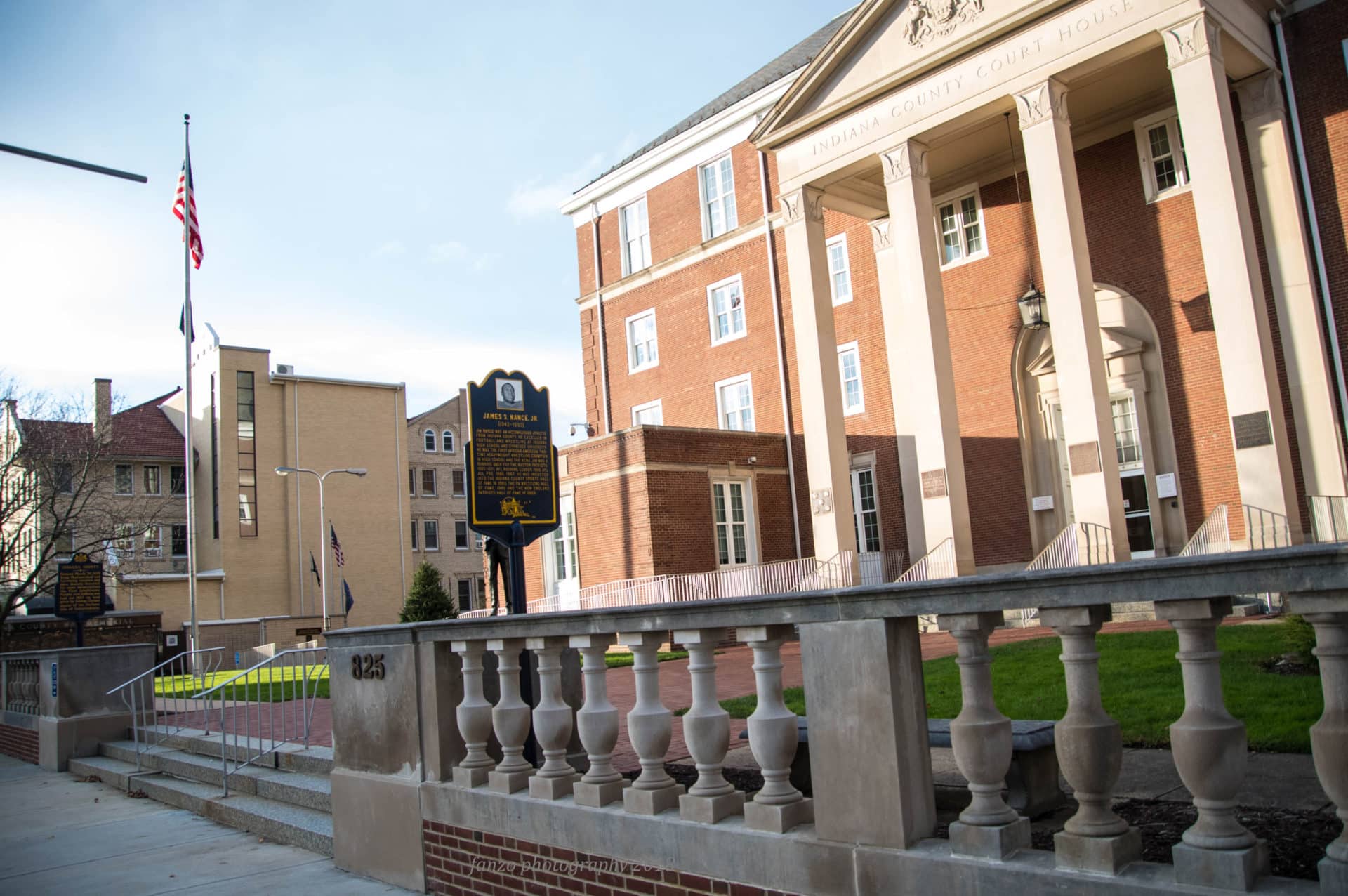
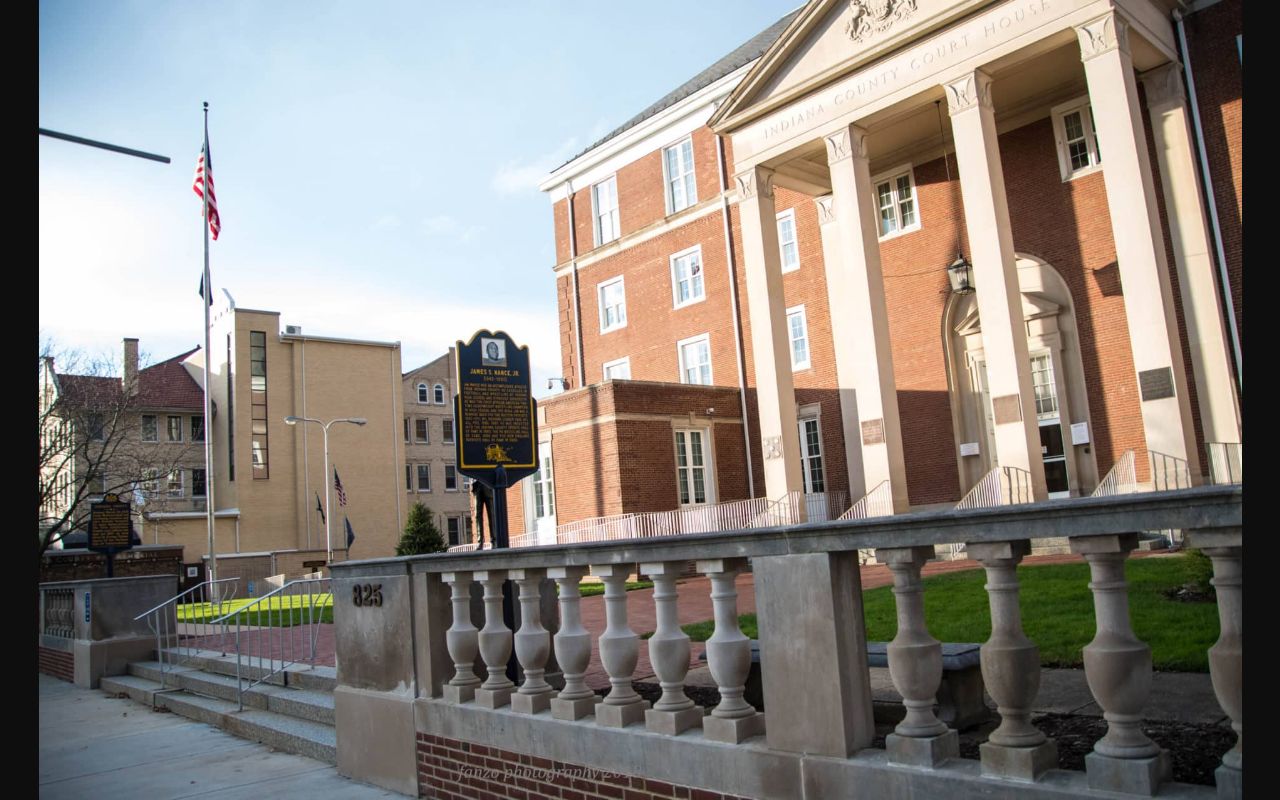
That location is also where many copy, filing, probate, and criminal clerk questions start when online records are not enough.
The Indiana County government home page is also assigned to this county court record overview.
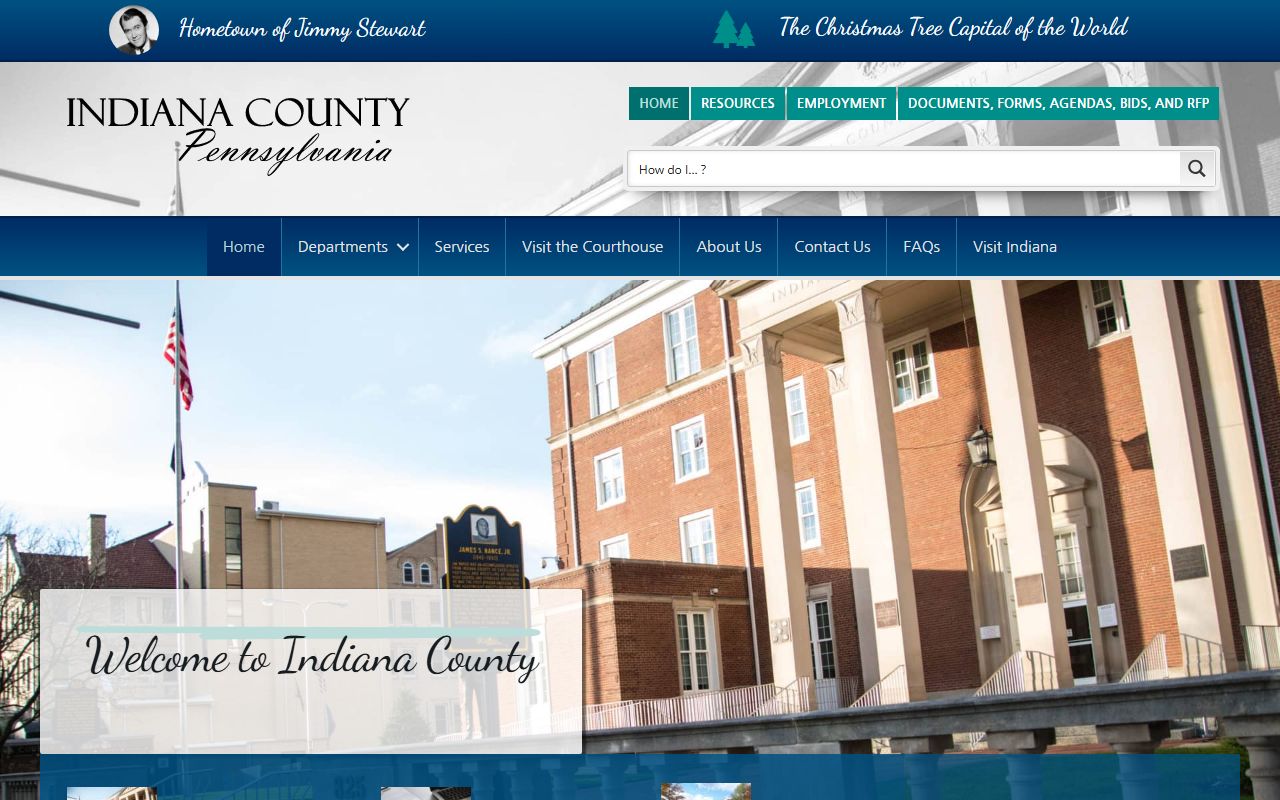
County department links from that source connect record seekers to the courthouse, jail, sheriff, court, and register offices named in the research.
The county's Visit the Courthouse page supplies parking, security, and visitor context for in-person court records work.
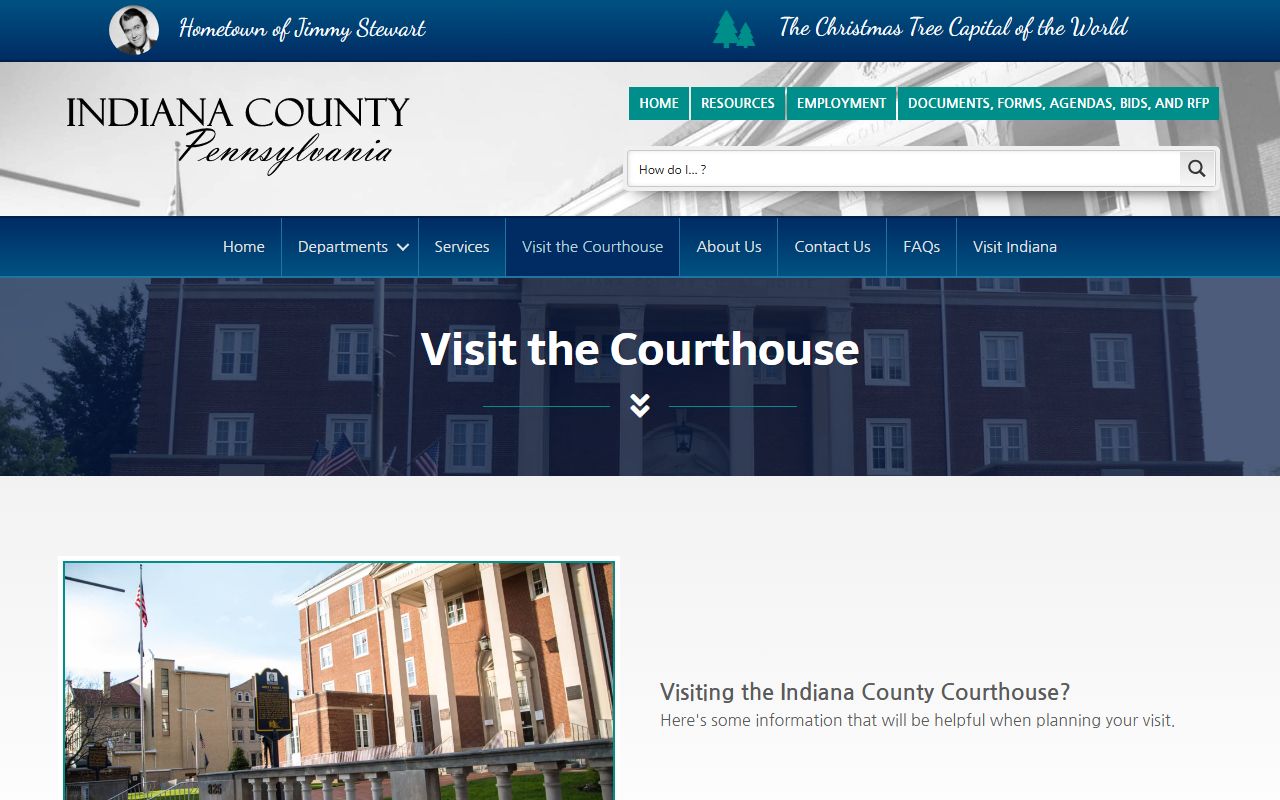
Those visitor details matter because some records still require a counter visit, appointment, phone call, or certified-copy request.
Indiana County Court Record Types
Indiana County Court records include civil, criminal, family, probate, traffic, landlord-tenant, small civil, juvenile, and protective-order material. Public access is not the same for each type. A civil docket may be available through UJS and the paid county civil portal, while a certified divorce decree requires the Prothonotary. A criminal docket may show charges, plea, sentence, and financial obligations, while a sealed or expunged file is not open to general public inspection.
- Criminal records: charging documents, docket entries, bail, pleas, sentencing orders, probation terms, costs, and dispositions.
- Civil records: complaints, answers, motions, orders, judgments, liens, arbitration records, and appeals from MDJ courts.
- Family records: divorce and custody matters, with restrictions for minors, abuse issues, and confidential identifiers.
- Estate records: wills, letters, short certificates, inventories, accounts, guardianships, and Orphans' Court petitions.
- Traffic records: citation, plea, disposition, fines, hearing dates, and failure-to-appear entries through MDJ or UJS systems.
Indiana County Public Access Rules
Court case records follow the Public Access Policy of the Unified Judicial System of Pennsylvania. County administrative records follow the Pennsylvania Right-to-Know Law, cited in the research as 65 P.S. Section 67.101 et seq. That difference matters. A court file is not handled like a routine county administrative request just because the courthouse is a county building.
Key Authority: UJS public-access policy controls court case records, 65 P.S. Section 67.101 et seq. covers many county administrative records, 18 Pa.C.S. Ch. 91 governs criminal-history record information, 18 Pa.C.S. Section 9122 addresses expungement, and 42 Pa.C.S. Ch. 63 governs juvenile confidentiality and expungement.
Restricted records include juvenile files, adoption records, mental-health commitment records, sealed cases, expunged records, and filings with protected personal data. Public court records should not expose Social Security numbers, full protected birth dates, financial account numbers, protected minor details, or abuse-victim identifiers. When a case appears online but a document is not visible, the next step is the record-holding office, not a third-party website.
Indiana County Record Fees
Only fees confirmed in the research should be used for planning. The Prothonotary civil portal is a subscription service, marriage licenses and certified marriage copies have specific costs, and naturalization copies have a published mail process. Several Register of Wills and Orphans' Court fee schedules changed in 2026, so unverified copy or filing totals should be confirmed with the office before payment.
| Item | Official Detail |
|---|---|
| Civil subscription portal | $30 per month plus $20 setup fee. |
| Marriage license | $55, cash or check, appointment required. |
| Certified marriage copy | $5 check payable to Clerk of Orphans' Court with a self-addressed stamped envelope. |
| Naturalization folded copy | $15 check or money order payable to Prothonotary with a self-addressed stamped envelope. |
| Recorder mail return | Add $1 if no stamped self-addressed envelope is included. |
Indiana County Sheriff and Jail
The Indiana County Sheriff's Office is at the courthouse, phone 724-465-3930. Its bench-warrant page says the office administers and serves Court of Common Pleas bench warrants for failure to appear in criminal cases, probation or parole violations, and Domestic Relations warrants. Warrant tips may be made by phone, by email at warrants@indianacountypa.gov, or by Facebook message, but those channels are not monitored 24 hours a day.
The Indiana County Jail is at 665 Hood School Rd., Indiana, PA, with phone 724-471-7500. No official public county web roster was confirmed. The county jail page warns about scam calls spoofing the jail number and tells people to call the jail and ask for the Shift Sergeant if they need to verify incarceration. For a focused custody path, use Indiana County inmate records; for court warrant handling, use Indiana County warrant records.
Indiana County Marriage and Orphans' Court
Marriage records and probate records do not sit with the same clerk that handles civil and criminal trial files. Maria Jack is listed as the Recorder of Deeds, Register of Wills, and Clerk of Orphans' Court. The office handles marriage applications, certified marriage copies, estate appointments, guardianship forms, Orphans' Court filings, recording, and property-alert services. Marriage license applicants need an appointment and must bring the filled online application, required ID, Social Security card, and payment.
Divorce records are different. Divorce decrees are Common Pleas civil/family records handled through the Prothonotary, even though marriage licenses are handled through Orphans' Court. Estate work is appointment-based, and the office asks users to email petition materials, death certificate, wills or renunciations, and the requested number of short certificates before cost calculation.
Read Indiana County Dockets
A docket is the court's event list. It is not always the full file. Common fields include docket number, court level, county, caption, filing date, case status, party names, attorneys, judge, docket events, hearing dates, charges or claims, statutes, bail, disposition, sentence, fines, costs, restitution, and appeal or transfer entries. For criminal records, the docket may show the complaint date, charge grade, plea, disposition, sentence date, confinement or probation terms, and payment obligations.
- Docket
- A chronological list of case events.
- Disposition
- The case result, such as guilty, dismissed, withdrawn, or judgment.
- Information
- A formal charging document filed in a Common Pleas criminal case.
- Short certificate
- An estate document showing the personal representative's authority.
Indiana County Court History
The Court of Common Pleas page gives local history that helps explain the current record structure. Indiana, Armstrong, Cambria, and Westmoreland Counties once formed the Tenth Judicial District, and Judge John Young of Greensburg presided over the first term in December 1806. In 1874, Indiana County became its own separate judicial district, the Fortieth Judicial District. That long county court history also explains why today's records are divided by function, with civil records in the Prothonotary, criminal records in the Clerk of Courts, and estates in the Register of Wills and Orphans' Court.
Indiana County Court FAQs
Where does an Indiana County court records search start?
Most searches start with UJS Case Search. Choose Common Pleas for main trial-court cases or Magisterial District Courts for traffic, summary, landlord-tenant, smaller civil, and preliminary criminal matters.
Is there one free county database for all Indiana County court records?
No official county-built all-records database was found. UJS is the statewide public docket source, while the county civil portal is a paid Prothonotary subscription service.
Who provides certified divorce decrees?
Certified divorce decrees come from the Prothonotary/Civil Division because divorce is a Common Pleas civil/family record. The Register of Wills office sends Indiana County divorce questions to the Prothonotary.
Does Indiana County publish a public jail roster online?
No official public county web roster was confirmed in the research. The jail phone line, UJS dockets, and state DOC search form the official fallback chain.
Can a Right-to-Know request get a court case file?
Court case records follow judicial public-access policy. The Right-to-Know Law is more appropriate for county administrative records, subject to exemptions.